

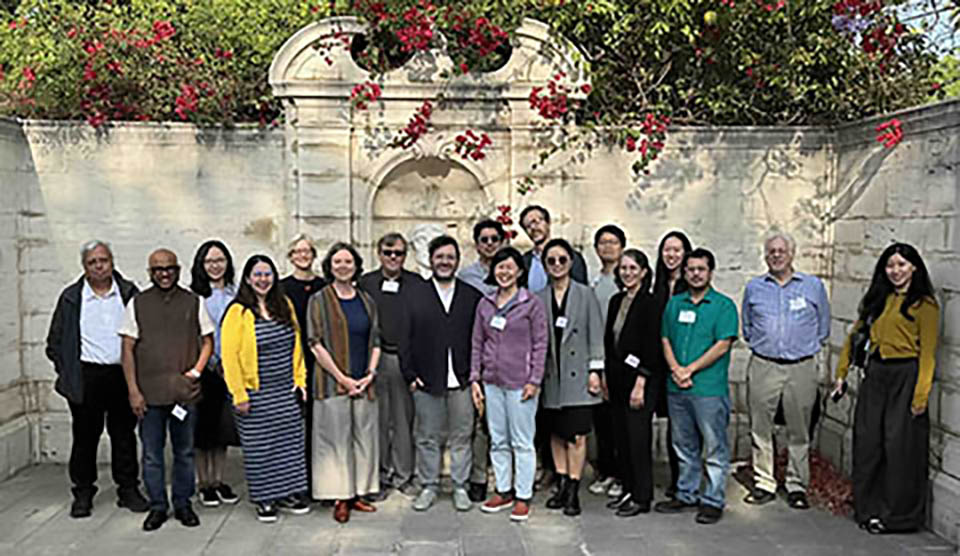
Friday, May 8, was the final conference in the Clark Library 2025-26 Core Program Strange Synchronicities and Familiar Parallels in Asia, 1600–1800: Joseph Fletcher’s Plane Ride Revisited. This third conference, Empires of Things, explored how objects, commodities, infrastructures, and embodied practices shaped early modern Asian empires and their interconnections. Scholars of the Ottoman, Mughal, Qing, and Inner Asian worlds considered how material forms such as daggers, jade vessels, temples, medicines, sugar, scents, gems, and maritime goods carried political, economic, religious, and epistemic meanings across regions. Presentations examined topics including Rajput kingship and Mughal gift exchange, Qing maritime knowledge of the Dutch, Jiangxi merchant-temple networks, Tibetan Buddhist medical bureaucracy, Indo-Muslim preventative care, Ottoman rumor cultures, and the expansion of sugar production in Qing Taiwan. Enthusiastic discussions highlighted how “things” moved through imperial, commercial, diplomatic, and ritual circuits, revealing both strange synchronicities and familiar parallels across Asia’s early modern empires.
-Jeanne Schniedewind, Programs and Publicity Coordinator