

Date/Time
Friday, April 9, 2027
9:00 am PDT – 5:00 pm PDT
Location
UCLA William Andrews Clark Memorial Library
2520 Cimarron Street

Organized by Javier Patiño Loira (University of California, Los Angeles) and David P. Bardeen (Los Angeles County Museum of Art)
This conference is part of the 2026-27 Core Program, a year-long series of three conferences – Human/Plant, Human/Animal, and Human/Machine – that invite participants from across the humanistic disciplines (including history, art history, history of science, literature, philosophy, religious history, and ecocriticism) to explore how early moderns (1400-1800) sought to define and understand themselves through their relationships with non-human life forms, entities and systems. The rise of generative models and autonomous systems has provoked intense anxieties about human exceptionalism, posing the deceptively simple question: What does it mean to be human? But “the human” has never been a stable category, particularly during the early modern period, when artists, writers and thinkers grappled with the slippery boundaries between human and non-human agencies.
At a time when generative AI has sparked intense discussion of human exceptionalism and what, if anything, makes humans unique, the third conference, Human/Machine, examines the long-standing and complex relationship between “the artificial” and “the human.” In the early modern period, understandings of the human involved an interrogation of the tools that we build and use, the animals that we mimic, and the machines we feared might replace us. From the early modern obsession with automatons—used by René Descartes to explain vegetative and sensitive life—to the era’s widespread interest in the relationship between artifice and the ability to deceive, the conference invites speakers to explore how the notion of the human-made served as a mirror for both the human and its negation, and how these ideas were mobilized in broader social and political contexts.
Speakers
Lamia Balafrej, University of California, Los Angeles
Jessica Keating, Carleton College, Associate Professor
Deirdre Loughridge, Northeastern University
Wenjie Su, University of Arkansas
Elly R. Truitt, University of Pennsylvania
Colin Webster, University of California, Davis
Thijs Weststeijn, Utrecht University
This event is free to attend with advance registration and will be held in-person at the Clark Library. Seating is limited. Walk-in registrants are welcome as space permits. The registration form will be posted here approximately one month in advance of the program.
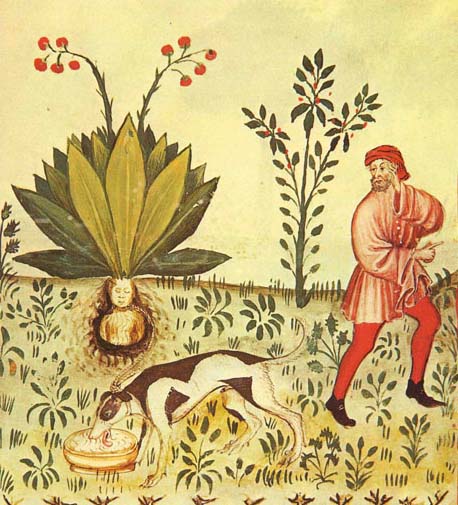
Image credit: Tacuinum sanitatis, Österreiche Nationalbibliothek, call number Cod. Ser. n. 2644, (fol. 40r).