

2026-27 Core Program
Human/Being, 1400-1800
Organized by Javier Patiño Loira (University of California, Los Angeles) and David P. Bardeen (Los Angeles County Museum of Art)
This conference is part of the 2026-27 Core Program, a year-long series of three conferences – Human/Plant, Human/Animal, and Human/Machine – that invite participants from across the humanistic disciplines (including history, art history, history of science, literature, philosophy, religious history, and ecocriticism) to explore how early moderns (1400-1800) sought to define and understand themselves through their relationships with non-human life forms, entities and systems. The rise of generative models and autonomous systems has provoked intense anxieties about human exceptionalism, posing the deceptively simple question: What does it mean to be human? But “the human” has never been a stable category, particularly during the early modern period, when artists, writers and thinkers grappled with the slippery boundaries between human and non-human agencies.
Conference 1: Human/Plant
December 4, 2026
The first conference, Human/Plant, considers the human relationship to the vegetal world. During the early modern period, trees and plants served as metaphors and models for thinking through human affairs, while philosophers and theologians debated the nature of the vegetative soul and the limits of plant sentience and responsiveness to the surrounding world. Furthermore, new technologies (the microscope), practices (grafting), disciplines (comparative anatomy), modes of representation (botanical drawings) and ideas (the mechanization of plant life) yielded transformative insights and new questions about plant behavior and life cycles and how they should be understood. Contributors will consider how the shifting perceptions of vegetal life challenged established hierarchies, redefined the boundaries between species—including what is intrinsically human and what is not—and informed new understandings of ecological connectedness. For purposes of the session, vegetal life is defined broadly to include agencies that have not always fit neatly within the plant/animal divide, including fungi, lichens and mosses, corals, parasites and plant-like growths, and mineral-vegetal hybrids.
Conference 2: Human/Animal
February 19, 2027
The second conference, Human/Animal, shifts focus to the relationship between human and animal life. In the early modern imagination, animals served both as mirrors for human social hierarchies and as test cases for the supposed uniqueness of the human capacity for rational thought. Developments in anatomical practice and theology encouraged scholars and writers to consider the moral status of animals, their communicative potential, and their capacity for suffering. Simultaneously, new technologies (such as taxidermy), practices (hunting, selective breeding, and domestication), and disciplines (comparative physiology and natural history illustration) generated radical insights into animal behavior, anatomy, and cognitive life. Contributors will consider how these shifting perceptions challenged human exceptionalism, blurred the boundaries between the “civilized” and the “savage,” and paved the way for modern understandings of biological kinship, as well as the role animals played in systems of colonialism, slavery and resource extraction. For this session, “animal life” is defined broadly to include beings that occupy ambiguous spaces in the historical imagination—including “monstrous” births, mythical beasts, microscopic organisms, and social insects—as well as the porous boundary between the tame and the wild.
Conference 3: Human/Machine
April 9, 2027
At a time when generative AI has sparked intense discussion of human exceptionalism and what, if anything, makes humans unique, the third conference, Human/Machine, examines the long-standing and complex relationship between “the artificial” and “the human.” In the early modern period, understandings of the human involved an interrogation of the tools that we build and use, the animals that we mimic, and the machines we feared might replace us. From the early modern obsession with automatons—used by René Descartes to explain vegetative and sensitive life—to the era’s widespread interest in the relationship between artifice and the ability to deceive, the conference invites speakers to explore how the notion of the human-made served as a mirror for both the human and its negation, and how these ideas were mobilized in broader social and political contexts.
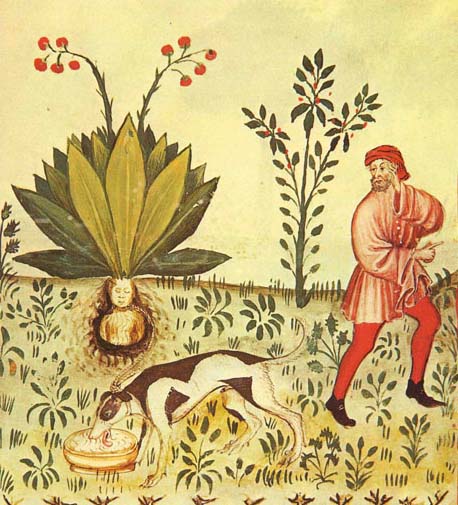
Image: Tacuinum sanitatis, Österreiche Nationalbibliothek, call number Cod. Ser. n. 2644, (fol. 40r).